Why your lash extensions keep falling out
Normal shedding or a real retention problem? The four habits that shorten a lash set, and the signs the problem is the application rather than you.
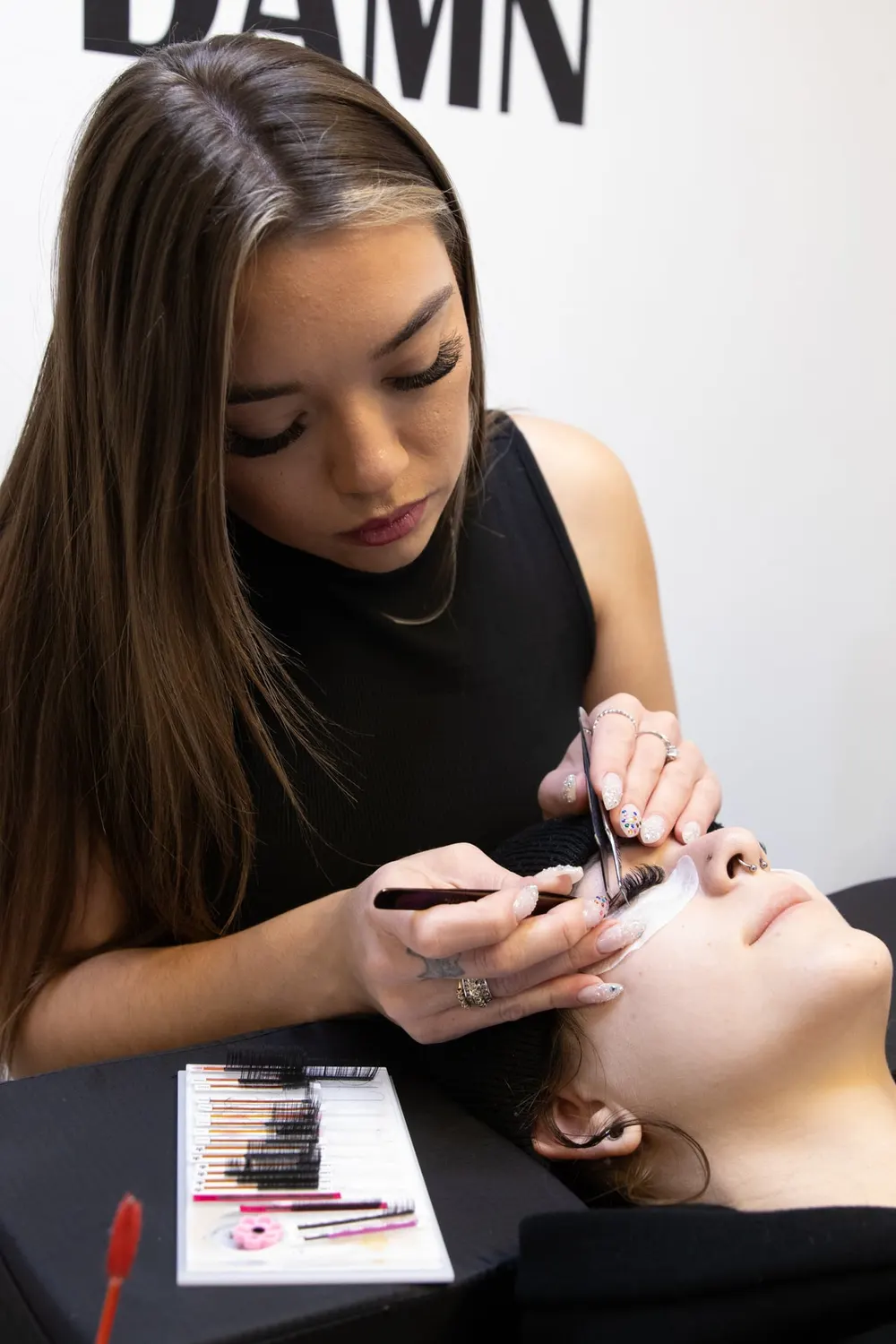
Losing a few extensions a day is how the service works. Losing half a set in the first week is not, and the difference matters, because one of those is biology and the other has a cause you can fix. Here is how to tell which one is happening to you.
Normal shedding, in actual numbers
Every natural lash runs its own growth cycle of roughly four to six weeks, and you shed somewhere between one and five of them a day. Each extension is bonded to exactly one natural lash, so it leaves when that lash leaves.
That means a good set thins steadily rather than dramatically. Around two weeks in, most people have lost 30 to 40 percent of what was applied, which is exactly why the fill window sits where it does. How often to fill and which one to book covers that timing.
Shedding also comes in waves. Seasonal change, a stressful stretch, a new medication, thyroid changes, pregnancy and postpartum all speed the cycle up temporarily.
Cause one: oil anywhere near the eye
This is the most common cause by a wide margin, and almost nobody connects it to the product doing it. Lash adhesive is cured cyanoacrylate, and oil breaks it down slowly from the outside in.
The usual suspects are not eye products. Face oil, rich night cream, cleansing balm, hair oil, leave-in conditioner, sunscreen that runs when you sweat, and a foundation primer with silicone oils all migrate upward and inward over the course of a day. Keep oils below the orbital bone, switch to oil-free around the eye, and rinse your hair conditioner off with your face tipped away. The Utah dry climate aftercare guide has the rest.
Cause two: sleeping face down
Mechanical loss, and the easiest one to identify, because it is almost always worse on one side. If your left eye is consistently sparser than your right, you are not being singled out by the universe, you sleep on your left.
A pillow crushes extensions sideways, bends them against the cure, and pulls on the natural lash all night. Sleep on your back if you can, use a silk or satin pillowcase if you cannot, and skip flat sleep masks that press on the lash line.
Cause three: not cleansing them
The instruction that gets ignored most, because it sounds backwards. Skipping the wash does not protect the bond, it buries it in oil, dead skin, makeup and dust, all of which eat at the adhesive and irritate the lid. Daily, oil-free, every single day. The step-by-step wash routine takes about a minute once you have done it a few times.
Cause four: touching, rubbing and picking
Rubbing your eyes when you are tired, wiping with a towel, scrubbing off eyeliner, and above all pulling at an extension that feels loose. One good rub can take out five lashes, and picking at them takes your natural lash with the extension.
If your eyes itch enough that you cannot leave them alone, that is worth investigating separately rather than powering through. Allergies, dry eye and lash-line irritation all show up this way.
How to tell a shed from a retention problem
- Look at what came off. An extension with a natural lash still attached, root and all, is a normal shed. A bare extension with a hard clear bond at the base and no natural lash in it is a bond failure.
- Count the days. Heavy loss in the first three days points at the cure window, usually water, steam or a hot shower too soon.
- Check for symmetry. Even loss across both eyes reads as biology. One side only reads as sleeping or rubbing.
- Track how long the set holds. Comfortably reaching two weeks is fine. Repeatedly being sparse at eight days is not.
When it is the artist’s fault
Sometimes it is, and you should not have to guess.
- Poor isolation. If two or three natural lashes are stuck together under one extension, they are on different cycles and the youngest one drags the rest out early. Stickies feel like tugging or a pinch.
- The wrong adhesive for the conditions. Adhesive cures on humidity, and Salt Lake City is dry. Adhesive chosen for a humid room shock-cures or under-cures here, and both fail early.
- Too much weight. A fine natural lash carrying a long, thick extension gives up sooner.
- Too much glue. Visible beads or clumped bases are not stronger, they are heavier and more brittle.
If extensions are coming off in the first week with the bond still attached, that is a bond problem, not a you problem. Text a photo, and if a set needs to come off cleanly, Lash Removal is $30 for 35 min.
Get a straight answer
Send a close-up photo to (801) 875-9677 and describe your routine honestly, including the hair products. Most retention mysteries are solved in one text. See lash options and book online, or book directly here.