Cat eye vs doll eye lash mapping
The two main lash maps, what each does to the shape of your eye, which one suits you, and how to ask for exactly what you want at your appointment.
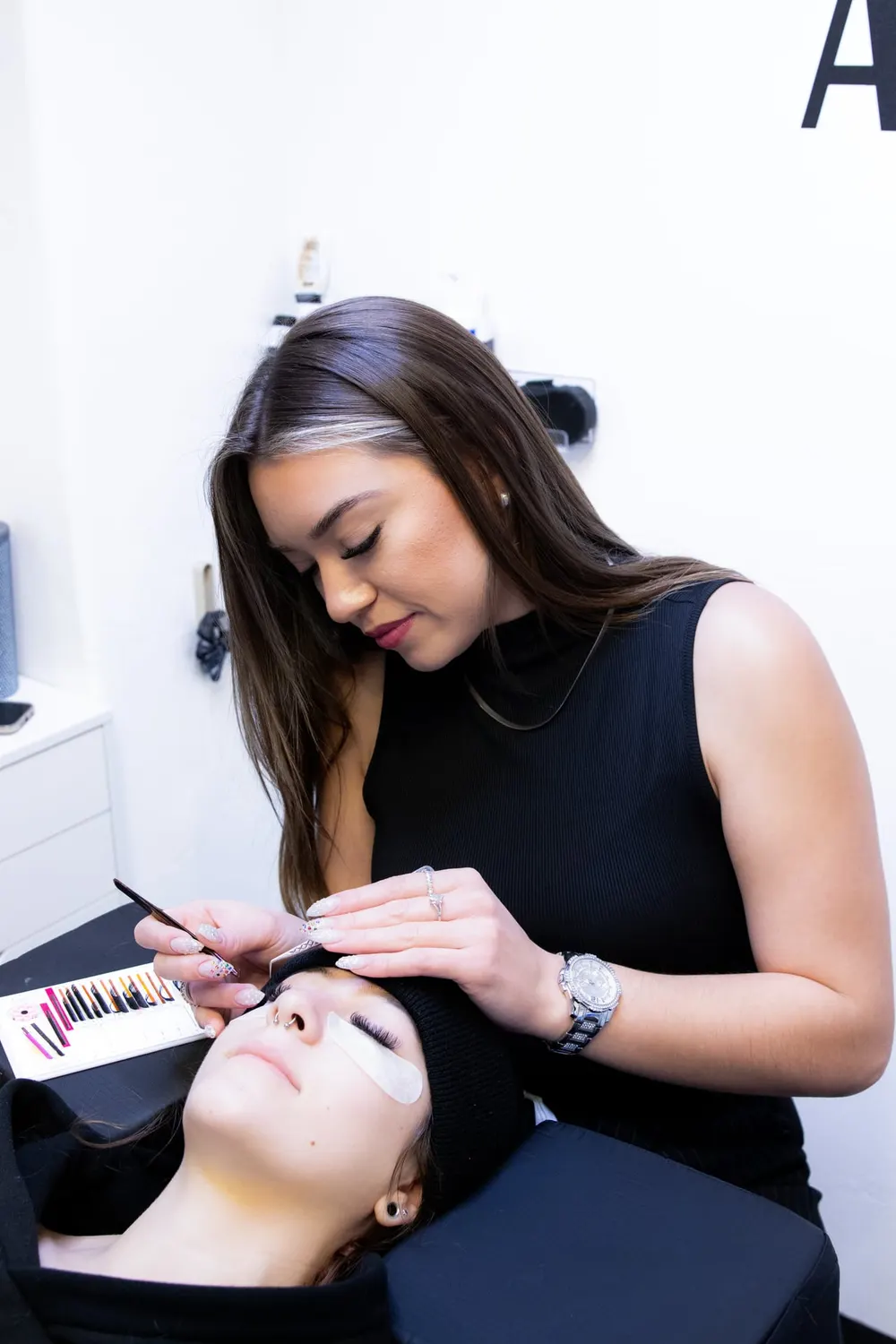
Cat eye and doll eye are the two maps everything else is built from, and they are opposites: one pulls the weight out to the corner, the other stacks it in the middle. Choosing between them changes the shape of your eye far more than length or density does. Here is how each one is actually constructed, and how to ask for the one you want.
What a map is, physically
Before any lashes go on, the lash line gets divided into sections, usually five to nine per eye, and each section is assigned a length in millimeters and a curl. The sections are usually drawn straight onto the under-eye pad, so the map is a visible plan rather than something improvised.
A map is written as a sequence from inner corner to outer, like 8-9-10-11-11-10. Every style is a different shape of that line. Move the peak two millimeters and you have a different look on the same face with the same extensions.
The cat eye, built
The cat eye climbs. Lengths ascend from the inner corner to a peak at or near the outer corner and stay there, with no taper at the end.
- A typical map: 8-9-10-11-12-12, with the two longest sections at the outer edge.
- The inner corner stays very short. This is what most people miss. The cat eye reads as dramatic because of the contrast between a tiny inner corner and a long outer one, not because the outer lashes are long in absolute terms.
- Curl does the direction. A softer B or C curl pushes length outward, which is what creates the flick. A strong D curl on a cat eye map sends the tail up rather than out and loses the effect.
- The tail can extend past the corner by a lash or two, following the angle of your lower lash line.
The effect is elongation. The eye reads longer, narrower and more lifted, with a sultry, eyeliner-like edge. It is the map that photographs as makeup even when you are wearing none.
The doll eye, built
The doll eye peaks in the middle. Lengths climb to their longest directly over the pupil and then come back down toward both corners.
- A typical map: 9-10-11-12-11-10, symmetrical around the center.
- The peak sits over the pupil, which is the whole mechanism. The eye looks rounder because the tallest point is at the widest point.
- Curl carries more of the work here. A D curl or a lifted C is standard, because the goal is height rather than length. This map with a flat curl just looks long and does nothing.
- Both corners taper, and the outer corner especially. Keeping it short is what stops it becoming a cat eye by accident.
- It is less forgiving of length. Because the longest lashes sit over the strongest part of your lash line, going too long reads startled rather than open.
The effect is opening. Eyes look rounder, wider and more awake, with a softer and more youthful result than a cat eye gives.
Squirrel and open eye, the middle ground
Most people are actually looking for one of these two and do not know the words.
- Squirrel puts the peak at about two-thirds along, over the outer edge of the iris, then tapers slightly to the outer corner. So: 8-9-10-12-11-10. You get lift and a hint of flick without dragging the corner down, which makes it the most wearable map in the studio.
- Open eye, sometimes called kitten, is a doll eye with the peak nudged outward and a flatter top: a long plateau across the middle and outer-middle instead of a single point. Gentle, natural, and the easiest to keep looking good as it grows out.
If you are between a cat and a doll, ask for squirrel. It is genuinely the answer most of the time.
Asking for what you want
- Describe the effect, not the name. "I want my eyes to look rounder" gets you further than a term you half-remember from a photo.
- Ask where the longest point will sit. That one question tells you which map you are getting.
- Your natural lashes set the ceiling. A fine lash cannot carry a 14mm tip regardless of the map. Classic and volume sets distribute weight differently, and that changes what is achievable.
- Adjust at the fill. A map is not permanent. Say "slightly longer at the outer third" and it happens. Fills are the right place to iterate.
Which map suits which eye shape is its own question, and lash styles by eye shape covers it properly. Color follows the map too: placing colored lashes at the peak emphasizes it, and placing them in the corner widens the eye.
Come map it out
Bring photos or nothing at all. See lash options and book online, or text (801) 875-9677 with a straight-on photo of your eyes.